
Disclaimer
All of the following is a personal experience and does not constitute a recommendation or advice. If you use the information below, you do so at your own risk. I moved to Portugal on a D visa a few years ago. So I just collected a mess of documents and came right by car. If you move in on a work agreement, the process will be different. Go to a broker and find out for sure. Here you can gather thousands of euros in fines if you do something wrong.
Why should we do that at all?
Car prices in Portugal are the highest in Europe. The reason is ISV (Imposto Sobre Veículos). In Europe, there should not be taxes on car imports, but the Portuguese came up with a registration tax instead. That is, if the car costs 30,000 euros, as it does elsewhere, and is imported "duty-free", then the Portuguese plate number is worth 15,000 more. ISV is calculated from an environmental load of CO2 emissions per 100 km in grams, engine size, and age. This applies to both new and used vehicles imported from Germany, for example.
Here is an online calculator so that you can be horrified personally.
And, of course, no one has canceled import VAT.
Luckily for the immigrants, there are some time-outs in this tyrannical regime. You can take one car without paying taxes when moving to permanent residence. This requires that:
- You owned the car for 1 year before the entry date. That was the case when I did it, but there have been recent mentions of a decrease to 6 months. I haven't checked it.
- You had evidence of moving to permanent residence.
- Documents for the legalization of the car were submitted two weeks after import.
Is it worth it? Count yourself. There is a difference in prices for cars, the cost of transportation, and the cost of registration of duty-free imports.
In my opinion, it is worth taking an old car only if you are entirely sure of its technical condition. The savings will be small, but there will be confidence, and the service in Portugal is expensive and of questionable quality. It is not typical to service cars satisfactorily here.
If you are going to sell the car later, and this can be done 5 years after the preferential import (before 5 years, it will have to be cleared by customs on a general basis), then the car must be liquid. They have a strange attitude towards cars here, mainly because of this ISV. Preference is given to poor equipment. Diesel is almost mandatory but only small and weak. Color - black, white, silver. Transmission is manual because the automatic one increases the annual tax. SUVs are not needed here, there is no snow, the streets are narrow, and a SUV will not crawl through everywhere. Resale options are worth a little. Roughly speaking, a leather interior in a used car does not increase its price.
As an illustration of the difference in mentalities, I saw a BMW X5 with a two-liter diesel engine, a ragged interior, a manual box, and halogen headlights in Portugal for the first time in my life. For us, it is stupidity, but they live it this way.
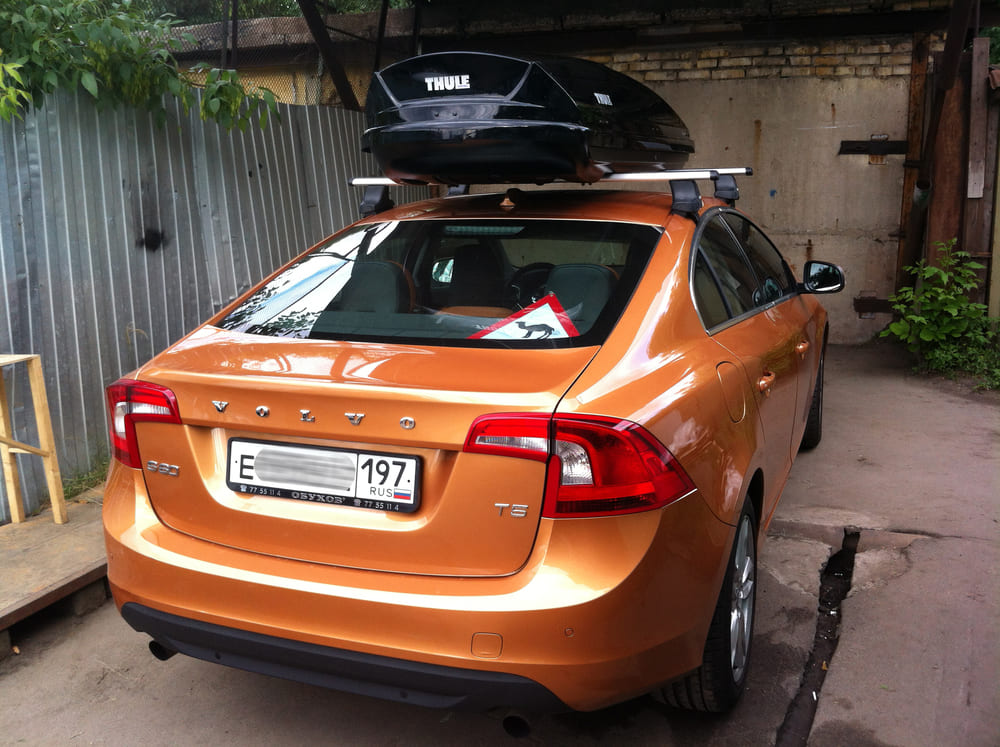
My case was with a new car, and it looked like this:
- The price of a new car in Russia was 37,000 euros at that time.
- Approximately the same (configurations differ by country)it was in Portugal - 52,000 euros
- The Moscow-Porto transportation cost about 1500 Euros, but that is if you drive. I preferred to make a trip out of it, which was much more expensive, but this no longer applies to the car itself.
- Legalization: 600 euros to the broker + duties, maintenance, and other additional costs in the region of 300 euros
Total 52,000 - 37,000 - 1,500 - 600 - 300 = €12,600 of savings. Realizing that I would be able to save about 13,000 euros, I decided that it was definitely worth it.
Transportation, entering and driving in Portugal for the first time
Everything related to driving in Europe has already been written about a hundred times. The awful zone is Poland. In addition, in Switzerland, you are shocked by the prices, it is better to go around it. An ordinary green card is enough as insurance for transportation. After that, in Portugal, you can already get local insurance. I did not put transit license plates, I used ordinary plates, and I think I did the right thing. You can’t ride on transits for a year, but re-registration took almost as long. That does not interfere with insurance, although there is an extra charge for foreign cars. I don’t remember the amount of the markup, but it is fair, maybe 30 percent of the regular price.
When entering the territory of Portugal, one must be disoriented by obtaining a document confirming the date of entry, all the deadlines for submitting papers, and, accordingly, penalties for violating the deadlines will be considered from it. Since there is no border, this is non-trivial. Nevertheless, I managed, not without complaining, to use a check issued at the border by the toll road system as such a document. They say that a normal document can be obtained from the police, but I did not try because it was already too late when I realized the need for it.
Concerning the toll roads. Unlike most countries, Portugal has many toll roads where you can't pay at all without a transponder. Just an arch with cameras stands above the road and counts everyone. Therefore, you need to move to the first service zone (there will be a sign) and link a credit card to the car number when entering the country. It works for a month, and debits from the card are automatic. With this check, I proved the entry. Although I do not recommend anyone to do this, they are not obliged to accept it. When the link stops working, there are two options: go to the post office regularly and pay by car number, or rent a special transponder for foreigners in Via Verde. It also has some restrictions on the validity period. I guess it is 3 months, and I remember that I went there several times to renew it. A standard transponder is obtained only with Portuguese numbers. I do not advise you to drive with unpaid road bills. Any patrol car with a camera on will see you right away. One inadvertently missed payment due to an expired transponder cost me a 180 euros fine.
The documents
| № | Document | Place of issuing | Apostille | Assurance |
|---|---|---|---|---|
| 1 | Application Form No. 9 | Portugal | ||
| 2 | EC Declaration of Conformity (Brand Dealer) | Portugal | ||
| 3 | Vehicle inspection (Portuguese) | Portugal | ||
| 4 | NIF | Portugal | ||
| 5 | Certificate from the Portuguese tax office on no income for 3 years | Portugal | ||
| 6 | Certificate from the Portuguese tax office on the absence of debts | Portugal | ||
| 7 | Certificate from the Portuguese social service on the absence of debts | Portugal | ||
| 8 | Document confirming the date of import | Portugal | ||
| 9 | Vehicle Passport | Available | Yes | Consulate |
| 10 | Vehicle registration certificate | Available | Yes | Consulate |
| 11 | Invoice on the car from the dealer | Available | Notary | |
| 12 | Acceptance certificate from the dealer | Available | Notary | |
| 13 | Road tax receipt | General Tax Directorate | Interpreter | |
| 14 | Labor contract | employer | Notary | |
| 15 | Personal income tax | employer | Notary | |
| 16 | Bank statement from salary card | bank | Notary | |
| 17 | Extract from the house book | The housing bureau | Yes | Consulate |
| 18 | Departure sheet | Passport office | Yes | Consulate |
| 19 | Extract from the personal account | The housing bureau | Consulate | |
| 20 | Utility bills in the name of the owner | Available | Consulate | |
| 21 | Copy and original of the owner's passport | Available |
All documents must be translated into Portuguese, some must be apostilled, the translation must be notarized, and the most important ones must be certified by the consulate, according to the table.
As funny as it sounds, the most important document among all of them is... What would you think? Departure address sheet. It is received in hand upon the termination of registration at the place of residence. It must be in the name of the owner of the car, and it must state "Portugal" as the address of the new place of residence. Its importance is that it is a state document issued by the Ministry of Internal Affairs of the Russian Federation, which directly confirms your intention to move to Portugal, which is the basis for applying the preferential import regime. Naturally, the passport office may resist and not want to note Portugal, but it is obliged to do so.
The invoice is also essential. It must highlight VAT (this is always done in the Russian Federation anyway) as proof that taxes on the car at the purchase were paid. Vehicle Passport and Vehicle registration certificate - everything is clear.
The rest of the documents confirm that you continuously lived in the Russian Federation for the entire time you owned the car. Most likely, not all papers will be required, but more is better than less. Portuguese bureaucrats shake just as much as ours when they see a man with a bundle of papers as thick as "War and Peace".
As far as I understand, in the case of Ukraine, Belarus, and other countries, this process should be very similar. However, what to do if the car was bought from another owner - I don’t know, since the dealer’s invoice with allocated VAT was required.
Process
In Portugal, look for a customs auto broker, preferably one who speaks a language you know. There are no problems with English. It is better to be closer to home because you will often visit him. It is even better to write to him beforehand and clarify everything before departure. There are many brokers, but they are not particularly advertised. I found mine on a recommendation. When I arrived at the airport to pick up my things delivered by the transport company, I asked them if they could help with the customs clearance of the car. They gave me the address, and everything was fine with me there. It is clear that this method does not work before departure. The broker is searched on Google for the query "Legalização automóvel". Then calling, clarifying the situation, messaging. Prepayment of 50% upon delivery of documents is typical. But if the broker is not found through Google you will be directed where you need in any cargo terminal - air, sea, railway, automobile. Ignore the pretentiousness of the office. It is even better if it is cheap. There are ordinary guys there.
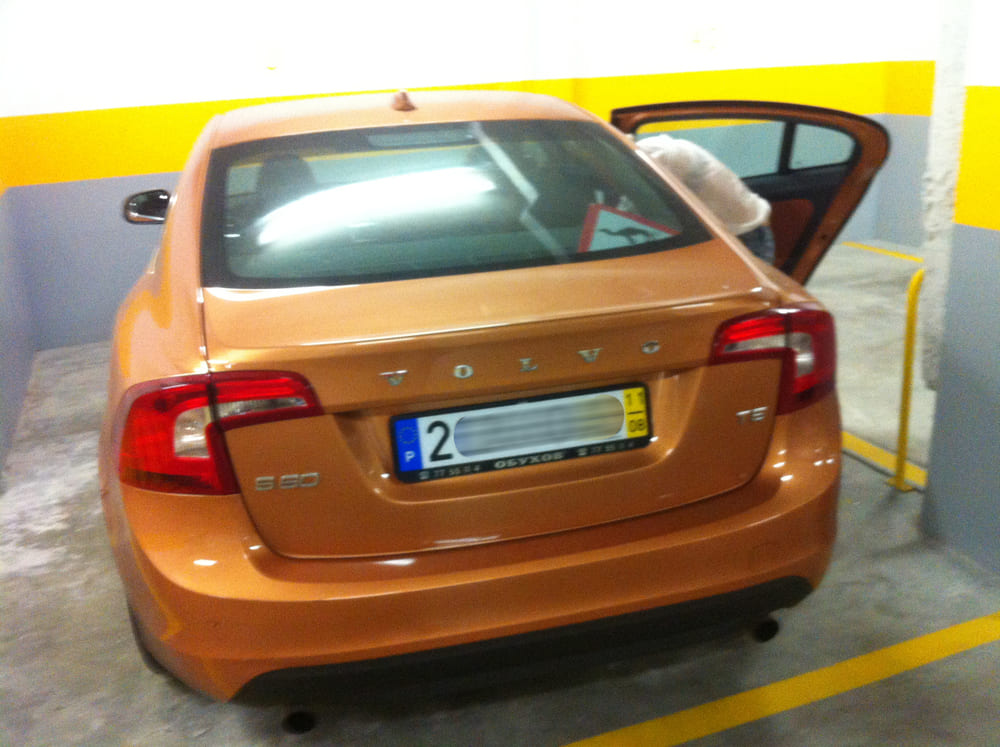
You have two weeks to submit your application. Give the broker the entire accumulation of documents. Including, you will have to hand over the originals of the Vehicle Passport and Vehicle registration certificate, which does not add optimism. He will give you a piece of paper stating that the car is under customs clearance in a couple of days. With this piece of paper, you can travel, but only on the territory of Portugal. Before obtaining Portuguese plates, the car becomes restricted to travel abroad.
The broker will tell you further when you need to go to maintenance and everything else. Then the process of paperwork for the car will hang until the documents are received from SEF. You can continue using the car, but it will receive the documents only after you receive them. Not sure if the paper residence is enough. I was waiting for a card. A piece of paper on temporary permission to use the car must be renewed when it ends. The date is marked on it.
A week before the legal customs clearance period (6 months), there was a polite knock on my door. There was a policeman in civilian clothes but with a police badge, who spoke fluent English, wanted to find out why the car was still not cleared by customs and threatened a little. I portrayed repentance and weeping for the evil SEF's captivity, which satisfied him. This was my first and hopefully my last meeting with Guarda Fiscal. As I later found out, this is a paramilitary unit under the Ministry of Finance, which is engaged in the forcible extraction of finance from smugglers and malicious violators of the tax regime. All terms of all customs affairs are under their control. Let me remind you that the customs clearance process, on the one hand, has its fixed terms, and on the other hand, it is tied to obtaining papers from the SEF, which has its own terms, also fixed by law, never performed in my memory. Guarda Fiscal is aware of it, and as I understood from one conversation, they hate SEF.
My personal customs clearance took about 10 months. In general, there was nothing particularly terrible in it. The broker earned his money, that's for sure. I prepared myself according to the laws, but I did not know Portuguese and had an unclear idea of how these laws are physically implemented. Therefore, the help of a broker was invaluable. It was annoying that all temporary documents and the transponder were constantly running out, and I had to travel to renew them, and also that it was impossible to go to Spain.
Conclusions
- You can bring the car, and it is profitable in case of money-saving if the vehicle is relatively new.
- Without preliminary preparation of documents before departure, it is unlikely that you will manage with that.
- You will have to constantly spin around with violations of all kinds of deadlines. You can’t let it go by itself.
- A customs broker is needed and very helpful in this process.